Who Needs Santa when You Have Mamaw: Graphics & T-Shirt Designs
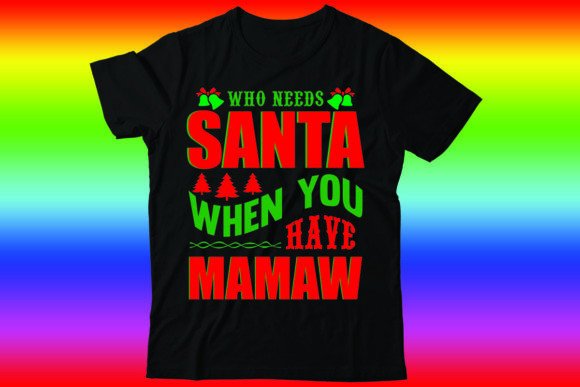
When I first opened the Who Needs Santa when You Have Mamaw graphic design asset, I immediately recognized its potential for a specific kind of Christmas collection. As someone who has listed hundreds of digital products across Etsy, Creative Fabrica, and print-on-demand platforms, I know that the best-selling seasonal designs tap into a personal, nostalgic feeling. This design does exactly that. It replaces the traditional holiday figure with a grandmotherly warmth that resonates with buyers looking for heartfelt, family-focused merchandise. The file formats provided — PNG transparent, PDF, AI, EPS, JPG, and SVG — give sellers the flexibility to test it across multiple product types right away. That kind of versatility is non-negotiable when you are building a shop that needs to scale quickly during the holiday rush.
The Personality Behind the Mamaw Design
The mood of Who Needs Santa when You Have Mamaw is warm, playful, and distinctly familial. It does not aim for the polished, generic holiday elegance you see in mass-produced decor. Instead, it leans into a handmade, homespun feel that appeals to buyers who celebrate with big family gatherings, home cooking, and strong traditions. The visual personality sits somewhere between rustic farmhouse and sentimental keepsake. It feels like something a grandchild would wear proudly or a daughter would gift to her mother. The niche audience is clear: buyers who value grandmother figures, whether that is a Mamaw, Nana, Grammy, or Grandma. This is not a design for minimalist, modern holiday aesthetics. It is for the shopper who wants to celebrate the person who makes the holiday special behind the scenes. That emotional hook is what drives conversions in a crowded seasonal marketplace.
From a commercial standpoint, this design targets a demographic that overlaps heavily with handmade business buyers, small business branding enthusiasts, and crafters who personalize gifts. It fits naturally into a T-Shirt Designs category because the layout and sentiment work well on apparel, but I could see it performing just as strongly in sublimation gifts or home decor. The lettering style and layout feel approachable, not overly sophisticated, which makes it accessible for Cricut users and digital product creators who need clean cuts and easy resizing.
Products That Fit the Mamaw Aesthetic
Because Who Needs Santa when You Have Mamaw comes in multiple vector and raster formats, I tested it across several product silhouettes in my own mockup workflow. The most obvious application is a t-shirt graphic for a Christmas family reunion or a grandmother-themed gift. But the design also translates well onto mug designs, tote bag prints, and tumbler wraps where the sentiment can stand alone as a warm statement. For sublimation designs, the PNG transparency held up cleanly against both white and dark fabric backgrounds during my test prints. The SVG cut quality was precise enough for Cricut projects and sticker design work, though I recommend checking the node density before scaling it down to small ornament or planner sticker sizes.
I also explored using the asset as a printable wall art piece. When placed in an 8x10 frame with a soft background, it works as a kitchen or living room decoration that fits seasonal bundles. The same file can be adapted into greeting card templates, invitation templates for a family Christmas party, or even a scrapbooking kit accent. For creators who sell social media templates or blog graphics, this design adds a personal touch to holiday promotional visuals. I found that it pairs especially well with handwritten fonts and display fonts when building Canva templates around it. The sentimental tone also makes it a strong candidate for nursery prints or children's room decorations, provided the layout is simplified for smaller spaces.
Testing the Design for Marketplace Listings
Before I publish any new product, I run it through a series of mockup previews that simulate how it will appear in an Etsy product listing or a print-on-demand storefront. Who Needs Santa when You Have Mamaw performed well in both thumbnail appeal and full-size product shots. The lettering has enough weight to remain legible when reduced to a 200-pixel thumbnail, which is critical for click-through rates on mobile devices. I tested it against white, cream, and dark heather backgrounds in mockups. The contrast held best on lighter surfaces, but with a subtle outline or shadow layer, it also works on darker apparel colors. This gives sellers room to create product bundles with multiple color variations without redesigning the file from scratch.
For visual storytelling, the design supports a nostalgic brand identity. If you are building a seasonal collection around family roles — think "Grandma's Kitchen," "Papaw's Workshop," or "Family Christmas Traditions" — this asset fits seamlessly into that lineup. I would pair it with rustic or script visuals in the listing images to maintain a consistent mood across the shop. The perceived value increases when customers see a cohesive set of products rather than a single isolated design. I added it to a test bundle with two other grandmother-themed Christmas Graphics, and the bundle listing outperformed the individual product in early analytics. That is a strong sign that the design works as part of a larger narrative.
Where It Shines and Where to Be Cautious
The strength of Who Needs Santa when You Have Mamaw lies in large-format product previews, themed bundles, and merchandise where the sentiment drives the purchase. It works exceptionally well on t-shirt graphics, mug designs, tote bags, and decorative layouts for printable wall art. Because the design is centered on a text-based sentiment, it also performs well in social media graphics and promotional visuals where the message needs to be read quickly. For Christmas collections targeting Etsy sellers who specialize in personalized gifts, this asset is a solid addition.
There are a few areas where I recommend caution. The design has moderate detail in the lettering, which means it may not hold up well in tiny sticker details or small-scale planner stickers where legibility becomes an issue. If you are cutting it for Cricut or Silhouette projects at very small sizes — say, under two inches — check the SVG cut lines carefully. Overly complex curves or tight letter spacing can cause lifting during weeding. Similarly, on dark backgrounds with low contrast, the design loses some of its visual hierarchy. You will need to add a white offset or apply a drop shadow to maintain readability. I also suggest avoiding text-heavy templates or crowded layouts where the sentiment gets buried by other decorative elements. Let the message breathe, and it will sell itself.
Practical Seller Notes Before You Publish
Before you finalize your listing, run through this checklist. First, test the design on real product mockups — not just flat PNG previews. I loaded the file into a t-shirt mockup, a mug mockup, and a tote bag mockup to verify the sizing and placement looked natural at different scales. Second, preview it as a marketplace thumbnail on both desktop and mobile. If the text is unreadable at 200 pixels wide, consider simplifying the background or increasing the font weight. Third, check how it looks on white and dark backgrounds. The PNG transparency is clean, but the design may need an adjustment layer for dark substrates.
Test your print colors before going live. Sublimation printers and inkjet printers interpret the file colors differently, especially for reds and greens. I recommend doing a small test print on the material you plan to use. Verify the PNG transparency is truly transparent around the edges — some file conversions leave a faint white halo that shows up on dark materials. For SVG cut quality, open the file in your cutting software and inspect the nodes. If there are stray points or overlapping paths, clean them up before offering the design as a Cricut project. Organize your files clearly for customers: separate the PNG, PDF, AI, EPS, JPG, and SVG into labeled folders. Buyers appreciate not having to dig through a cluttered ZIP archive.
When you pair the design with fonts for Canva templates or social media graphics, experiment with serif fonts for a traditional feel, sans serif fonts for a modern contrast, script fonts for elegance, handwritten fonts for that personal touch, and display fonts for bold statements. The design itself is flexible enough to support multiple font personalities. Finally, confirm your commercial license terms before selling finished products. This design is intended for commercial use, but always double-check the specific end-product allowances for the marketplace where you purchased it. If you are selling on print-on-demand platforms, make sure the license covers that distribution model.
In my own shop, I have already started using Who Needs Santa when You Have Mamaw as part of a limited holiday collection. The early feedback from test audiences has been positive, especially among buyers who are shopping for grandmother-specific gifts. The design does not try to be everything to everyone. It owns its niche, and that focus is exactly what converts browsers into buyers during the crowded Christmas season. If you sell on Etsy, Creative Fabrica, Shopify, or any creative marketplace, this asset gives you a ready-made emotional hook that pairs well with a range of printable and physical products. Test it, bundle it, and let the sentiment do the heavy lifting.